The Second System Effect: The Consequences We Don't See Coming
When industries discuss innovation, they often focus on the immediate outcomes: increased revenue, greater efficiency, wider market access, and enhanced consumer experiences. These are the measurable results that justify investment and drive adoption.
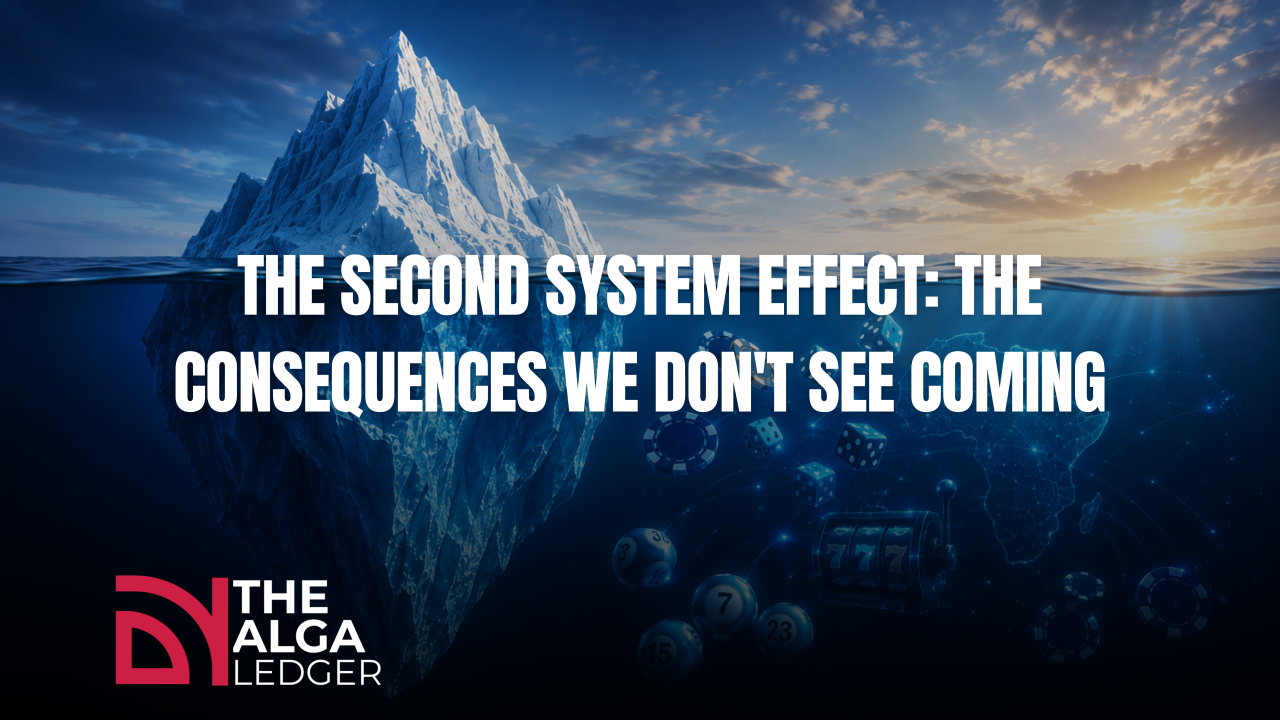
Yet history shows that the most profound changes are rarely the first effects. They are the second system effects.
The term refers to the consequences that emerge after a new technology, policy, or innovation has become embedded in society. These effects are often subtle, difficult to measure initially, and largely absent from strategic discussions. By the time they become visible, they have already reshaped behaviours, institutions, and cultures.
Globalisation and digital connectivity provide a compelling example. The internet was designed to connect people, democratise information, and unlock access to knowledge. It succeeded in all three respects. Today, a student in Nairobi can attend a lecture from London, an entrepreneur in Johannesburg can serve clients in Lagos, and regulators across Africa can collaborate in real time.
These were the first-order benefits.
The second-order effects are only now becoming fully apparent.
Borders have become less relevant in the digital environment. Consumers engage with products, services, and entertainment providers located thousands of kilometres away. Expectations are shaped not by local markets but by global experiences. Digital communities increasingly influence behaviour more than physical communities.
For the gaming and lotteries sector, these changes are particularly significant.
Online gaming has expanded access and convenience, but it has also created challenges that were not fully anticipated during its initial growth phase. Illegal operators can reach consumers across jurisdictions without establishing a physical presence. Underage individuals are exposed to gaming content through digital channels that transcend traditional regulatory boundaries. Social media has accelerated the speed at which trends, behaviours, and risks spread across populations.
These developments are not necessarily the direct result of innovation itself. They are the second system effects of a connected world.
The same principle applies to regulation.
A regulatory framework may successfully address today’s challenges, yet unintentionally create new pressures tomorrow. A market may achieve rapid growth while simultaneously increasing complexity for enforcement agencies. New technologies may improve player protection while creating entirely new forms of consumer vulnerability.
This is why industry leaders must look beyond immediate outcomes.
The question is no longer whether innovation is occurring. It is whether we are anticipating what comes next.
For regulators, operators, and industry stakeholders across Africa, the challenge is not simply responding to visible trends. It is identifying the hidden consequences that emerge after those trends become normalised.
The future of the gaming and lotteries sector will not be defined solely by the technologies we adopt or the regulations we implement. It will be shaped by our ability to recognise the second system effects before they become systemic challenges.
Because by the time an effect becomes obvious, it is often already embedded. And the most important risks are rarely the ones we can already see.
Originally published in The ALGA Ledger on LinkedIn.