Beyond Celebration: The Responsibility of Building the Africa We Speak About
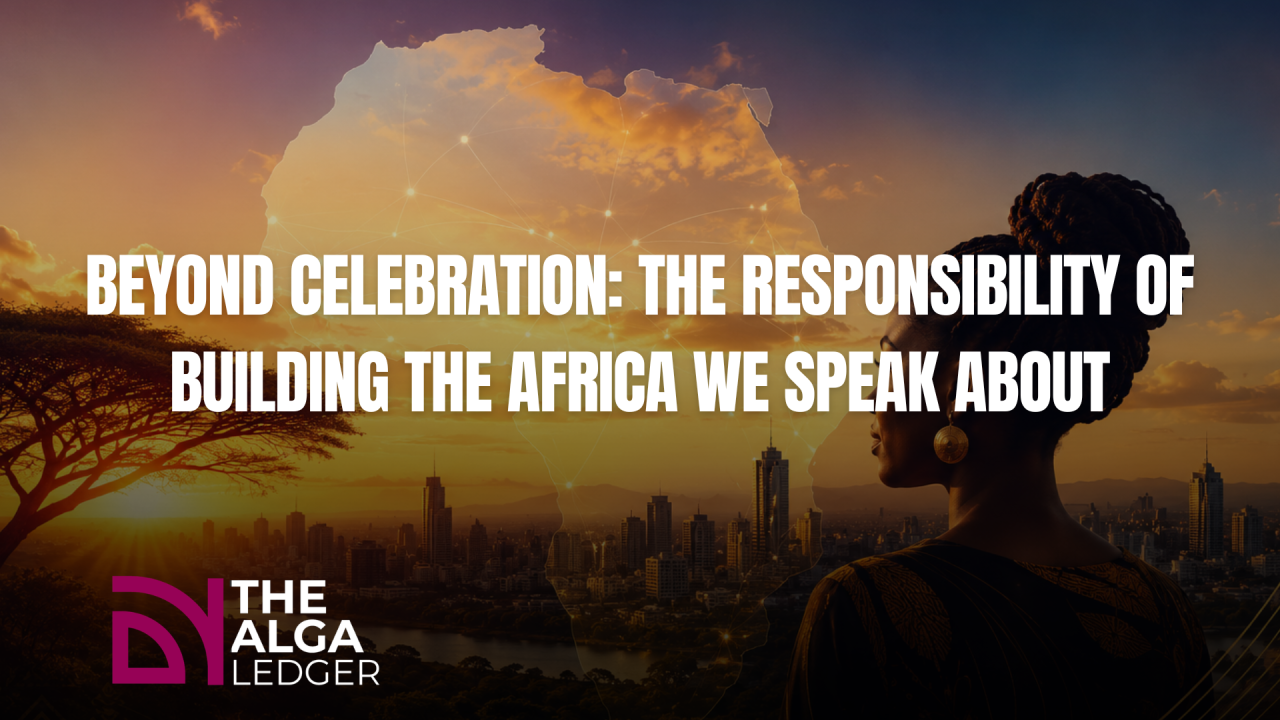
As reflections on Africa Day continue across the continent, it becomes increasingly important to interrogate what meaningful continental progress requires beyond symbolic celebration.
Commemorating Africa’s identity, resilience, diversity, and potential remains important. However, the long-term advancement of the continent will ultimately depend on the quality of its institutions, the integrity of its leadership, the sustainability of its industries, and the willingness of stakeholders across sectors to contribute toward solutions that extend beyond individual commercial interests.
The conversation around Africa’s future cannot remain aspirational in nature alone. It must increasingly translate into measurable action, coordinated leadership, ethical governance, strategic collaboration, innovation, skills development, and the intentional creation of industries capable of contributing meaningfully toward long-term socioeconomic advancement across the continent.
Africa presently occupies a significant moment within its historical and economic trajectory. Through localisation, digital advancement, continental integration, and increased global participation, the continent has in many respects reintroduced itself to the world. Emerging markets across Africa are attracting renewed international attention, investment interest, technological expansion, and evolving consumer engagement at a pace that continues to reshape multiple sectors, including gaming, entertainment, technology, and digital commerce.
This presents Africa with a renewed opportunity to define its own trajectory with greater confidence, ownership, and influence within the global economy. It is a moment that can be approached with optimism, ambition, and belief in the continent’s long-term potential. However, it is equally a moment that requires discernment, institutional maturity, and responsible leadership.
Rapid industry growth without strategic understanding carries risk.
As industries continue to expand across African markets, there is an increasing need for organisations, operators, associations, and stakeholders to invest in understanding the behavioural, economic, regulatory, social, and cultural nuances that shape how African markets move, respond, and evolve. Sustainable industry participation cannot rely solely on imported frameworks or external assumptions. It requires ongoing market study, regional understanding, local engagement, and operational approaches that are informed by the lived realities of African consumers and communities.
This is particularly important within sectors navigating complex realities such as responsible gaming obligations, illegal gambling activity, consumer protection, technological acceleration, youth safeguarding, digital accessibility, and broader questions surrounding public trust and industry accountability.
The sustainability of any industry operating within Africa will increasingly depend on its ability to balance innovation with responsibility, expansion with ethical governance, and opportunity with long-term societal consideration.
Within this context, collaboration becomes more than strategic alignment; it becomes a continental responsibility. Regulators, operators, industry associations, public institutions, advocacy structures, and enforcement bodies must collectively contribute toward building industries that are not only commercially successful, but credible, inclusive, sustainable, and reflective of Africa’s broader developmental aspirations.
Africa’s future will not be shaped solely by market growth or global interest in the continent. It will be shaped by the seriousness with which African industries choose to govern themselves, understand their markets, navigate their challenges, and contribute toward building systems capable of sustaining future generations with integrity and responsibility.